
By Herb Riband
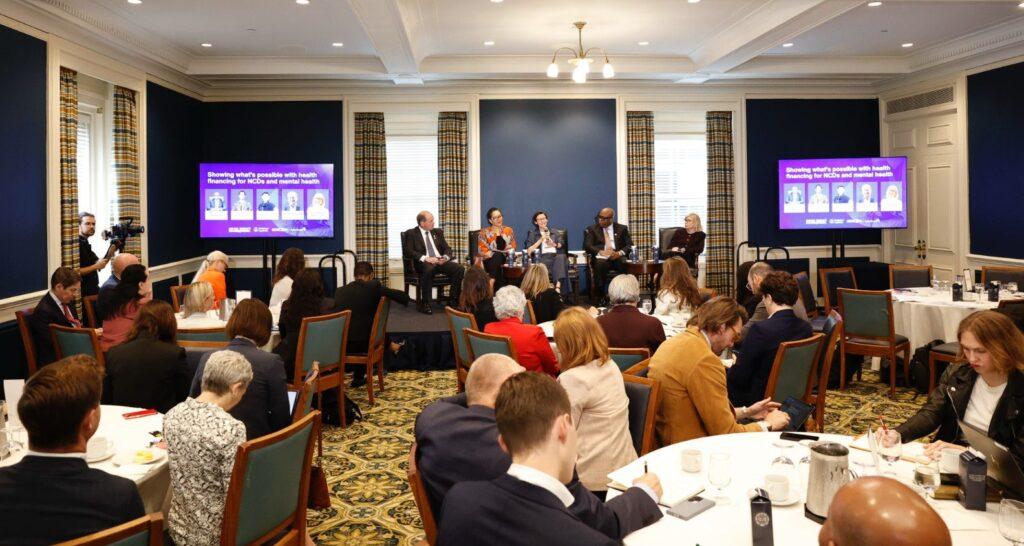
Credit: Sarah Merians Photography
Last week, I attended my fourth UN High-Level Meeting on Noncommunicable Diseases (NCDs), this time with the inclusion of mental health on the agenda. My first such meeting was fourteen years ago in 2011, when the idea of heads-of-state gathering at the UN to make commitments on NCDs was still a dream. That first meeting was a milestone: fresh, urgent, and charged with possibility.
Four meetings later, the landscape looks very different. The health and economic burden of NCDs has been amply documented, with impacts in every region of the world. Premature, preventable mortality from NCDs is imposing large and growing costs on people, families, and society. The lack of investments in NCD prevention, early diagnosis, and timely treatment lead to costly complications down the road. By not investing in the healthcare workforce, countries miss an opportunity to provide a direct contribution to economic growth.
Today, we have the tools, strategies, and levers to act against NCDs. Yet recognition and know-how have not translated into adequate resource allocation. The world has made progress, but it has fallen short of what is needed. Last Thursday, the Political Declaration on NCDs and mental health was not formally adopted–for now. But there was broad, undeniable support from the vast majority of UN member states, and we need to build on this momentum.
We are now at an inflection point in global health, with many challenges and uncertainties, but also important opportunities to do things differently and better. With the recent disruptions to official development assistance for health, it is critical that countries take ownership of ensuring adequate financing for their health systems.
This was a recurring theme across nearly every discussion I attended at UNGA. Ministry representatives, multilateral agencies, civil society leaders, and private sector voices all pointed to the same need: mobilize more resources (more money for health) and allocate resources to achieve the greatest impact (more health for the money). These are the exact challenges the Financing Accelerator Network for NCDs (FAN)—an initiative led by Access Accelerated and the World Bank, in collaboration with Results for Development (R4D)—was created last year to address. FAN is advancing sustainable financing solutions by supporting country-led strategies and building capacity so that resources are available and deployed to make a positive difference on NCDs.
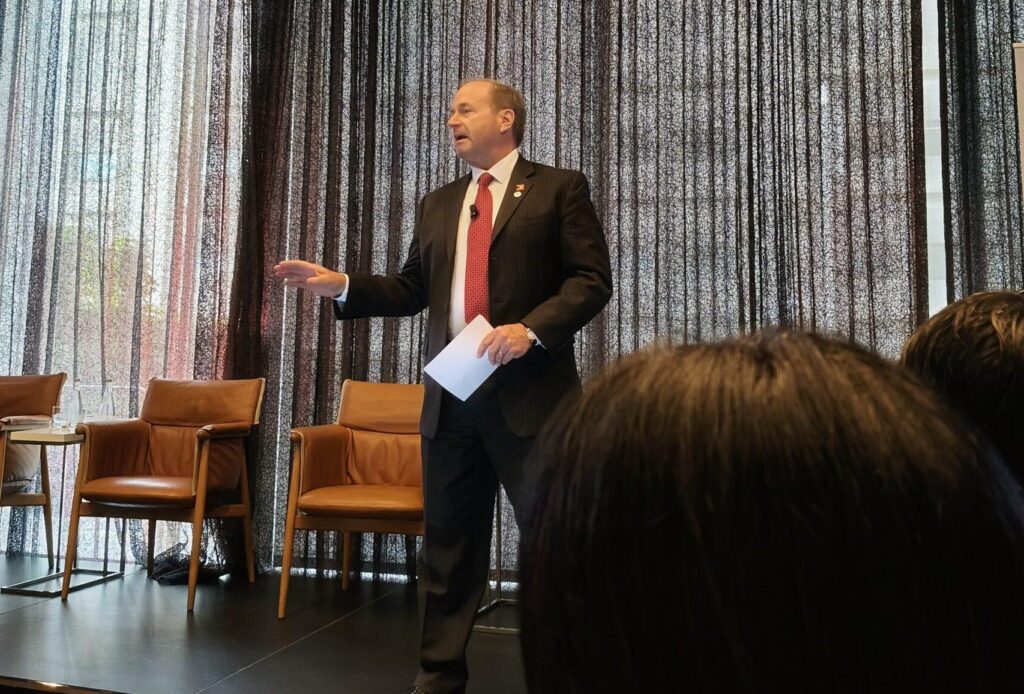
Evidence of this approach is emerging across countries, signaling a critical turning point for NCD investment and action. Ghana has recently launched a national medical trust fund dedicated to NCDs. Tanzania has quintupled its health budget in three years. Georgia has doubled its budget. Indonesia has secured $4 billion in World Bank loans across three years to address NCDs. And Monique Vledder, World Bank’s Head of Global Health, Nutrition and Population Unit, announced the Bank had supported countries with $2.6 billion in financing for NCDs and mental health in the past year—with more on the way.
At a panel co-hosted by the Coalition for Access to NCD Medicines & Products, Access Accelerated and other partners, countries announced bold, new commitments, including Kenya’s Ministry of Health Principle Secretary, Dr. Oluga Ouma, who committed to integrate NCDs into its national health insurance and pharmacy benefits schemes. he Democratic Republic of Congo’s Minister of Health, Dr. Samuel Roger Kamba, pledged to strengthen primary healthcare and ensure the integration of NCDs and mental health, supported through health taxes and other financing mechanisms.
Credit: Sarah Merian Photography
Another session co-hosted by Devex, Access Accelerated and other partners turned the focus to financing for impact and sustainability—with speakers and participants stressing the need for multiple financing solutions, whether through health taxes, debt swaps, or results-based financing. Leaders from Africa CDC and the Pan American Health Organization (PAHO) emphasized the importance of building capacity so that financing infrastructures are effective and sustainable. These efforts reflect the same spirit of FAN: country-driven, long-term, and rooted in partnership.
The Japan Pharmaceutical Manufacturers Association (JPMA) and the Permanent Mission of Japan to the United Nations convened a panel I had the privilege to moderate, where Dr. Ikuo Takizawa described how the Japan International Cooperation Agency (JICA) works collaboratively with countries to build capacity for lasting impact, including the achievement of universal health coverage (UHC). Dr. Mary Amuyunzu-Nyamongo, Chair of NCD Alliance Kenya, shared her country’s journey toward self-reliance as development aid dwindles.
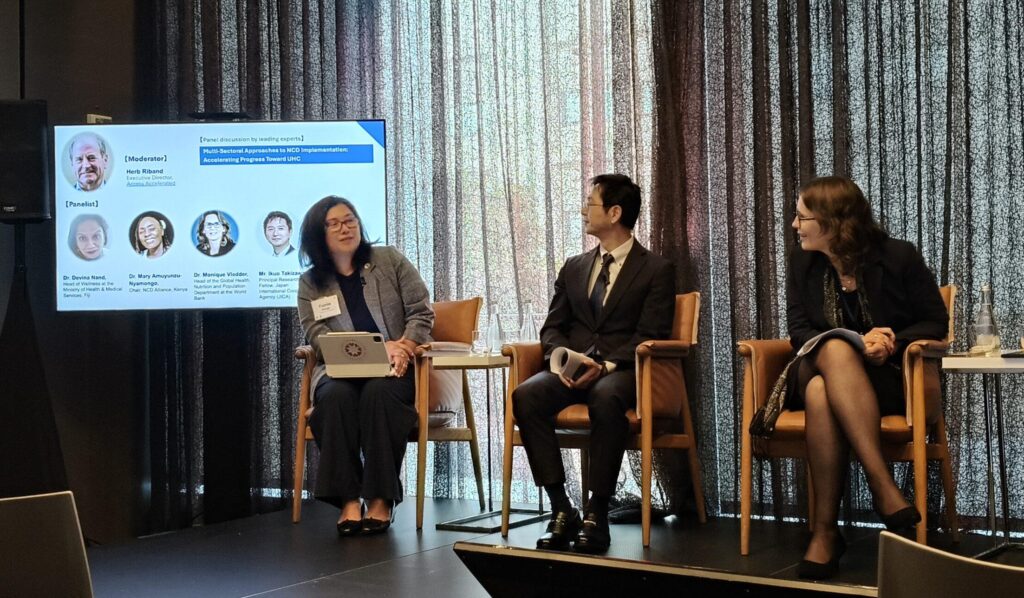
These reflections underscore why FAN’s model matters: countries need demand-driven, locally relevant support. At Access Accelerated and the FAN, we work to provide this through on-demand technical assistance, country-to-country learning opportunities, and catalytic seed funding for promising financing initiatives.
At the close of the panel, I asked the panellists—Dr. Ikuo Takizawa (JICA), Monique Vledder (World Bank), Dr. Amuyunzu-Nyamongo (NCD Alliance Kenya), and Dr. Fumie Griego (Takeda)—what gave them reason for optimism. Their answers were clear: NCDs are now firmly on the political agenda. Multisectoral partnerships are proving their value. Accountability extends beyond health ministries to heads of state and finance ministers. And, above all, country ownership is deepening, with targeted support from global and regional partners.
In a separate session hosted by the NCD Alliance and partners, the Health Minister of Ghana, the Honorable Mr. Kwayena Mintah Akandoh, called this emerging ecosystem a “coalition of courage.” Courage is precisely what this moment demands: courage to sustain momentum, to assume accountability, and to hold fast to a long-term vision.
As we look ahead to 2030 and the targets of SDG 3.4 (reducing premature NCD mortality) and 3.8 (universal health coverage), the coming months will be critical.
The measure of our commitment will not be found in declarations alone, but in the actions all stakeholders take that have measurable impact on the ground. Have we achieved everything we hoped for in 2011? Not yet. But let’s recognize that there has been meaningful progress, and accelerate our efforts.
These are genuine reasons for hope. They strengthen my conviction that if we put people, communities and countries at the center of our work, and work in solidarity to drive new country-led approaches and partnerships, we can deliver lasting impact for the people who need it most. The time to come together and act is NOW.