
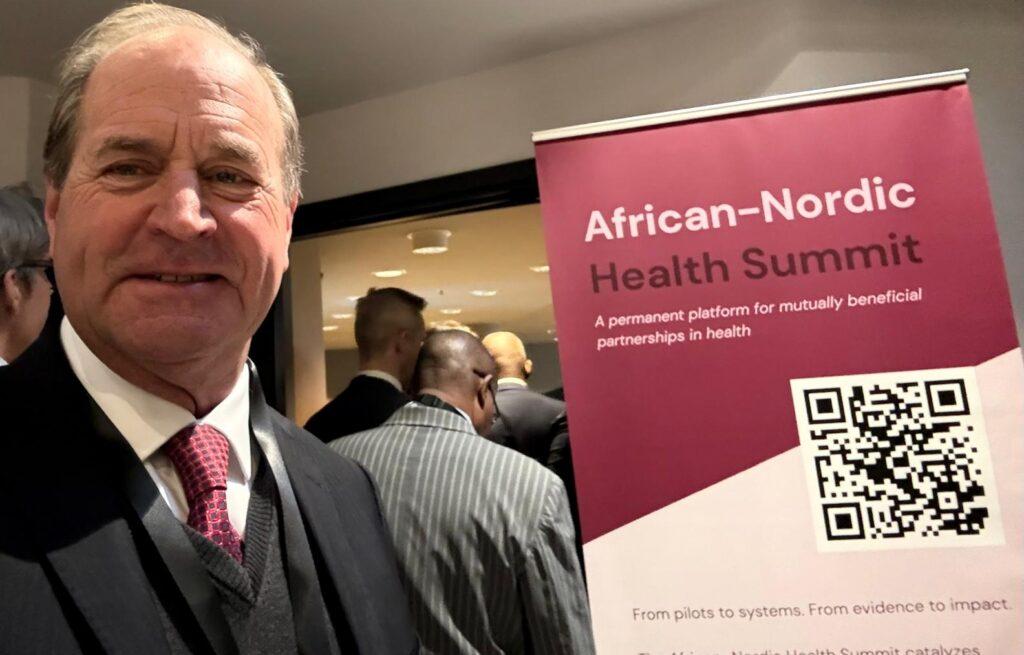
By Herb Riband, Executive Director, Access Accelerated
Last week in Stockholm, for the very first time, the African–Nordic Health Summit convened an assembly of African and Nordic ministers alongside leaders from government, business, philanthropy, and civil society. At a moment when global health stands at a pivotal crossroads, the Summit launched a new platform for collaboration—linking two regions to confront some of the most pressing health challenges of our time. I was privileged to be invited to participate, representing Access Accelerated and the Financing Accelerator Network for NCDs (FAN).
The timing of the Summit could not have been more consequential. Coming four months after the UN High-Level Meeting on Non-Communicable Diseases and Mental Health in September and the adoption of the global political declaration on these issues in December 2025, the urgency is clear: the need to translate global commitments into national action amid fiscal constraints, shifting donor priorities, and a rapidly changing global health landscape.
Why this moment matters
The Summit emphasized that this moment demands action. By bringing African and Nordic perspectives together, it created a space to develop a blueprint for collaboration, accountability, and health and financial sovereignty, reflecting the principles of the Accra Reset.
“Advancing women’s health is not—and should not be—a siloed agenda; it serves as a strategic entry point for strengthening integrated health systems and improving population health.”
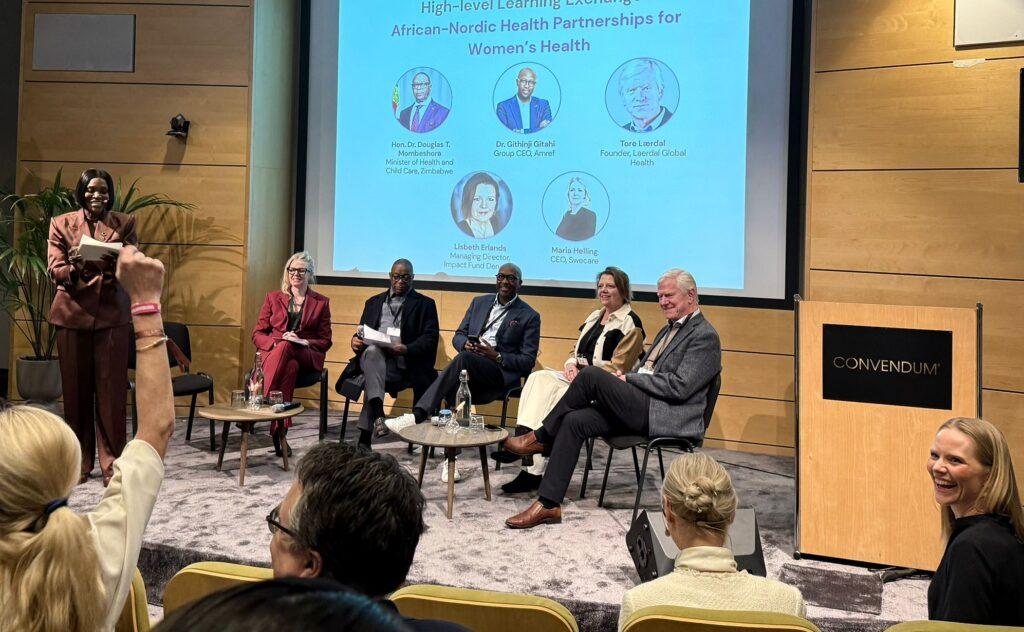
Discussions centered around the Summit theme of women’s health across the life course—particularly maternal and newborn health and the prevention and treatment of NCDs. Speakers emphasized that advancing women’s health is not—and should not be—a siloed agenda; it serves as a strategic entry point for strengthening integrated health systems and improving population health. This reflects our work at Access Accelerated and FAN. In 2025, we contributed to Reflecting Reality: A Closer Look at Women and Non-Communicable Diseases, a report by Resolve: Global Health, which examined structural and financing barriers women face in accessing NCD care. Equitable financing for NCDs must begin with inclusion—of women, underserved populations, and people with lived experience.
Moving from ambition to action
Over the past year, it has become clear that shared ambition alone is insufficient; success requires scalable, sustainable action. This point was reinforced as leaders in Stockholm highlighted critical enablers for moving beyond pilot initiatives toward sustainable implementation: strengthening country-level leadership, prioritizing health—including NCDs and women’s health—and fostering integrated responses through trusted, inclusive, and well-coordinated partnerships.
“It has become clear that shared ambition alone is insufficient; success requires scalable, sustainable action.”
These priorities are at the heart of the FAN, our flagship initiative launched in 2024 together with the World Bank, Results for Development, and a growing coalition of global and local actors. FAN works directly with low- and middle-income country governments and key stakeholders to strengthen health financing for NCDs, beginning in Sub-Saharan Africa and now expanding to Latin America and the Caribbean. Grounded in country ownership, regional coordination, and practical problem-solving, the FAN demonstrates how ambition can translate into action.
Financing with people at the center
During the Summit, participants emphasized that health investments must deliver tangible results. They stressed the need for new approaches including taking a “systems thinking” approach; coordinating efforts rather than running fragmented, duplicative programs; integrating health services instead of maintaining vertical disease silos; moving from pilots to scale; community-based health delivery; and ensuring transparency and accountability for all concerned.
During the discussions, I shared an observation: as official development assistance for health from many high-income countries has declined, domestic resource mobilization will become increasingly important. Governments need to take the lead by setting priorities, allocating appropriate resources, and ensuring these resources are expended efficiently and effectively. However, multilateral development banks, sovereign wealth funds, philanthropies, impact investors, and the private sector all have catalytic roles in filling financing gaps. The panellists agreed that the challenge lies in alignment—ensuring all stakeholders understand local needs and collaborate to address national priorities in a complementary manner.
“Governments need to take the lead by setting priorities, allocating appropriate resources, and ensuring these resources are expended efficiently and effectively. However, multilateral development banks, sovereign wealth funds, philanthropies, impact investors, and the private sector all have catalytic roles in filling financing gaps.”
Access Accelerated, the FAN, and our partners are uniquely positioned to support this effort—by convening stakeholders around country priorities, strengthening health financing for NCDs, and helping translate a country’s health vision into sustainable solutions.

Looking ahead
Having spent over three decades in healthcare innovation, market access, and policy, I am convinced that effective multi-sectoral partnerships are the engine of progress. That message was echoed at the Goalkeepers Nordics 2026 event, where Bill Gates highlighted both remarkable gains in global health (e.g., declining child mortality) and the risks of complacency under the theme “We Can’t Stop at Almost.” As countries grow wealthier, their capacity to invest in health increases, and global cooperation must evolve to harness that potential. Global health and advanced technologies are now converging, providing incredible opportunities to harness technology to improve drug discovery, healthcare delivery, and health outcomes.
Having spent over three decades in healthcare innovation, market access, and policy, I am convinced that effective multi-sectoral partnerships are the engine of progress.
The direction ahead is clear: strengthening health financing for NCDs, advancing women’s health, and supporting country-led health systems are interconnected agendas. The Africa–Nordic Health Summit was an important step forward in that journey. Access Accelerated and the FAN remain committed to advancing this work in the years to come.